Lead-Safe Painting for Berkeley's Older Homes
Lead paint removal on a pre-1978 Berkeley home isn't a job for a standard scrape-and-repaint crew. Federal and California law both regulate how a painter can disturb old paint on these houses, because dust from an uncontained scrape or sanding job is one of the most common ways lead gets into a child's bloodstream during a home renovation.
Berkeley's Craftsman bungalows, brown-shingle homes, and Victorian cottages sit disproportionately on the older side of that 1978 cutoff. This guide covers why that matters, what the EPA's Renovation, Repair, and Painting (RRP) rule and California's additional lead rules require, how painters test for lead, the difference between encapsulating old paint and removing it outright, and how to confirm a painter's lead-safe certification is real before you hire them.
Why Berkeley's Older Homes Carry So Much Lead Paint
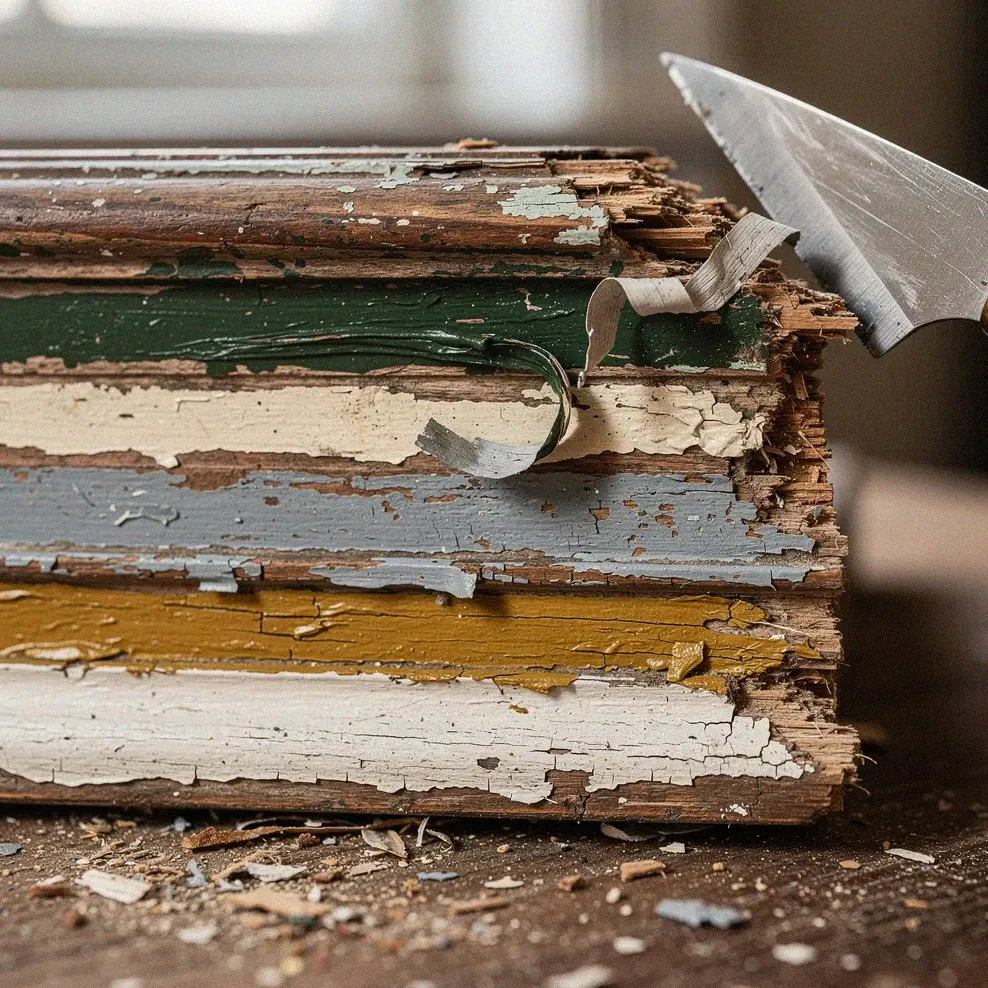
Berkeley's housing predates a lot of California's postwar suburban growth. Elmwood, North Berkeley, and the Berkeley Hills filled in with Craftsman bungalows and brown-shingle homes largely between 1900 and the 1930s, with pockets of Victorian and Edwardian cottages even older. Every one of those homes was built well before the 1978 federal ban on lead-based residential paint, and most were repainted multiple times over the following decades using paint that, until the ban, commonly contained lead as a durability additive. Layer enough repaints on top of each other, and a home can carry several coats of lead paint underneath whatever color shows on the surface today.
Exterior surfaces usually carry the deepest paint history of any part of these homes. See our exterior painting page for how that history factors into a modern exterior job, and our guide to painting Berkeley's Craftsman, Victorian, and brown-shingle homes for how each style handles prep beyond the lead question.
Health Risks From Lead Paint Dust During a Repaint
Children under six face the highest risk, because their nervous systems are still developing and their bodies absorb far more of any lead they ingest than an adult's does. There's no confirmed safe blood lead level for a child; even low-level exposure has been linked to reduced IQ and behavioral effects that don't reverse. Pregnant women carry a related risk, since lead crosses the placenta, and lead stored in a mother's bones from years past can release into her bloodstream during pregnancy.
The dust itself is the real hazard, not just visible paint chips. Sanding, scraping, or heat-stripping old paint breaks it into fine dust that settles invisibly across floors, windowsills, and yard soil, then gets tracked through the house on shoes and hands. Interior trim and windowsills are just as often the source as exterior siding, particularly where interior painting disturbs decades-old paint on woodwork that's never been stripped. This is exactly why the EPA built the rule covered next: renovation work, not undisturbed paint, is the exposure pathway that matters.
The EPA RRP Rule: What It Requires and Who It Applies To
The EPA's Renovation, Repair, and Painting (RRP) rule, in effect since 2010, applies to any work that disturbs paint in a home built before 1978, once that disturbance passes a small threshold: roughly more than six square feet of interior surface or twenty square feet of exterior surface, or any window replacement. Under those conditions, the firm doing the work must be EPA Lead-Safe certified, and the person supervising the job on site must be a certified renovator who's completed EPA-approved training.
The rule requires the painter to give homeowners the EPA's lead hazard pamphlet before work starts, contain the work area with plastic sheeting and warning signs, use the dust-control practices covered below, and keep job documentation for three years. Violations carry real financial exposure: the EPA can issue civil penalties running into the tens of thousands of dollars per violation, per day, adjusted upward periodically for inflation. Full requirements are published on the EPA's Renovation, Repair, and Painting Program page.
California's Additional Lead-Safety Rules
California doesn't stop at the federal floor. Cal/OSHA's Lead in Construction standard sets a stricter workplace exposure limit for anyone working around lead, requiring air monitoring, respiratory protection past a set threshold, and medical surveillance for crews with sustained exposure. It's a worker-safety layer on top of RRP's focus on the family living in the house. California also runs its own certification track through the California Department of Public Health for larger-scope lead-related construction, which can apply alongside EPA RRP certification depending on the job. A painter on a pre-1978 Berkeley home should be able to speak to both layers, not just recite "EPA certified" and stop there.
Testing for Lead Paint: XRF Testing vs. DIY Swab Kits
EPA-recognized chemical test kits, the kind sold as DIY lead paint swabs, trigger a color change when a reagent contacts lead in the paint. They're fast and inexpensive, a reasonable first check before minor DIY touch-up work, but they carry a real false-negative risk on walls painted over multiple times, where the swab may not reach a lead layer buried under newer coats.
X-ray fluorescence, or XRF, testing is the more reliable standard, and it's what a certified lead risk assessor uses for a full inspection. A handheld XRF device reads the lead content of a painted surface in place, through multiple layers, without a paint chip needing to go to a lab. It's the right call before a full-scope renovation, before deciding between removal and encapsulation, or ahead of a real estate transaction where results need to hold up. Lab analysis of a paint chip sample is the other EPA-recognized option when XRF isn't available.
Safe Work Practices During Lead-Safe Prep and Painting
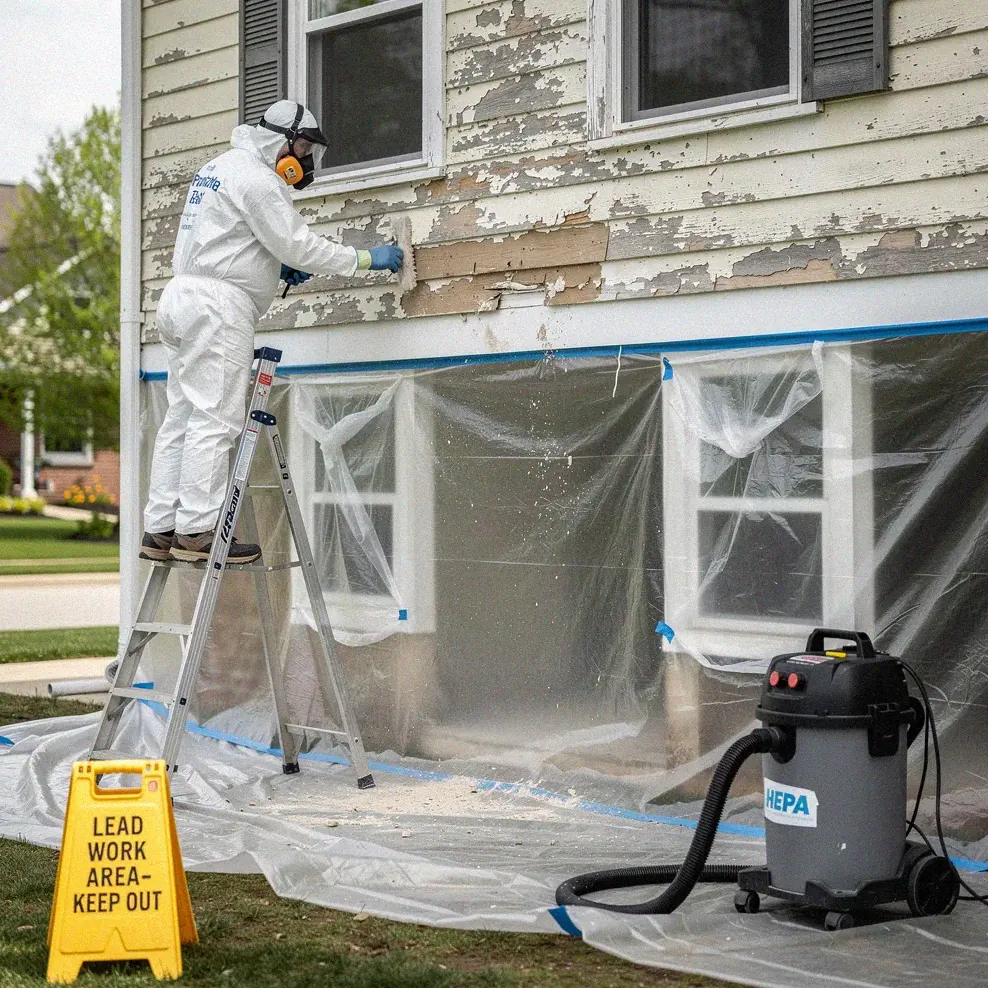
Once a painter knows they're dealing with lead paint, the RRP-required practices are what actually keep the dust contained: plastic sheeting on the ground and any interior floors, extending well past the work area, taped-off windows and doors, and posted warning signs restricting access while work is underway.
Dust control during the work matters just as much. HEPA-filtered vacuums, both for cleanup and as dust-collection attachments on sanders, capture fine lead particles that a shop vacuum or broom would just redistribute into the air. Wet sanding and wet scraping keep dust from becoming airborne in the first place. Open-flame paint burning and uncontained dry sanding over large areas are both prohibited under RRP, since they generate the highest volume of airborne lead dust of any prep method.
Encapsulation vs. Removal: Which Makes Sense for Your Home
Encapsulation seals existing lead paint under a coating designed to bond permanently to the surface, blocking chip and dust exposure without disturbing what's underneath. It's faster, generates far less dust, and costs meaningfully less than full removal on most jobs. The tradeoff: it needs periodic inspection to confirm the seal is intact, and it isn't right for surfaces that flex or take heavy wear, like window sashes.
Full removal, stripping paint to the bare substrate, is the better call when the surface underneath is failing and needs repair anyway, when it will see friction encapsulation can't handle, or when a renovation changes the surface enough that sealing over old paint isn't practical. It costs more, from both the labor-intensive stripping and the disposal requirements for lead-contaminated waste, which can't go into a regular construction dumpster.
Lead-safe requirements and city permitting can overlap. A routine repaint typically doesn't need a permit in Berkeley, but siding replacement, structural repair, or work on a designated historic property can trigger both at once. See our guide to Berkeley painting permits and regulations for what actually triggers a permit before you scope out removal or encapsulation work.
How to Verify a Painter's EPA Lead-Safe Certification
Ask for the firm's EPA certification number specifically, not just confirmation that someone on the crew took a class. Certification applies to the firm as a business entity, renewed every five years, separate from the individual renovator training that at least one supervisor on the job also needs. A painter who's vague about the firm's certification number, or can't produce it in writing, is a red flag worth pausing on.
The same scrutiny should apply to the contractor's general license. In California, verify the painter holds a valid C-33 Painting and Decorating license through the CSLB license database, separately from the lead-safe question. See our page on EPA Lead-Safe certified painting for what the certification specifically covers.
What a Qualified Lead-Safe Contractor Looks Like
For lead-safe work on a pre-1978 Berkeley home, look for a contractor who carries current EPA Lead-Safe certification alongside a California C-33 contractor license, covering the two-layer verification described above. A contractor who backs exterior work with a multi-year warranty and brings real crew experience with Berkeley's brown-shingle, Craftsman, and Victorian homes specifically is better positioned to handle the housing stock where this guide's rules come up most often.
Ask for the firm's EPA certification number and license number up front, and confirm both independently rather than taking a verbal assurance at face value. A contractor who hands over both without hesitation, and who can speak specifically to the containment steps they'll use on your home, is the one worth hiring.
FAQ: Lead Paint Removal on Berkeley Homes
How much does lead paint removal cost on a Berkeley home?
Cost depends on the surface area needing containment, whether the job calls for encapsulation or full removal, and how much of the home is affected. Lead-safe work adds real cost on top of a standard repaint for setup, filtration, and waste handling. See our Berkeley house painting cost guide for general ranges; an on-site estimate is the only way to get a number specific to your home.
Can I remove lead paint myself on an older Berkeley home?
You can legally do this on your own owner-occupied home, since RRP applies to hired firms, not DIY homeowners. The health risks to your family don't go away just because you're doing the work yourself, though, and most homeowners lack HEPA-filtered tools or proper disposal channels. Hiring an EPA Lead-Safe certified painter is the safer choice beyond a very small touch-up.
What's the difference between "lead-safe certified" and just "licensed"?
A California C-33 license covers a painter's general qualification to do painting work. EPA Lead-Safe certification is a separate credential for working on pre-1978 homes without spreading lead dust, applied to the firm and renewed every five years, plus renovator training for the job supervisor. A painter can be fully licensed without being lead-safe certified.
Does encapsulation actually stop lead paint from being a hazard?
Yes, when applied correctly and inspected periodically. Encapsulation coatings bond to the existing paint and block chip and dust exposure without disturbing what's underneath, and it's a recognized abatement method, not a shortcut. The coating isn't permanent, though, so surfaces need periodic checks, and it isn't right for high-friction surfaces like window sashes, which need full removal instead.
Get an On-Site Lead Assessment Before Work Starts
A phone estimate can't tell you whether your home's paint contains lead or how much containment a job needs. Ask any painter bidding on your pre-1978 Berkeley home to test the surfaces first, by XRF device or an EPA-recognized lab test, and to spell out in writing whether the plan is encapsulation or removal and why. A written scope that names the lead-safe practices being used, not just "we're certified," is the clearest sign you're hiring someone who treats the rule as a real safety practice rather than a checkbox.