Deck Staining in Berkeley, CA
Deck staining near me in Berkeley starts with the same question every homeowner with a backyard deck eventually asks: how do you protect wood that lives outside year-round, facing sun on one side of town and fog on the other? A stain isn't paint. It soaks into the wood grain instead of sitting on top of it, so the natural character of the boards still shows through while the finish blocks UV rays and sheds water.
Berkeley's backyards are part of how people actually live here. A deck off the kitchen is where dinner happens on a warm evening in the flats, and it's how a Berkeley Hills home makes the most of a view no living room window can match. Most of those decks, especially on homes built before the 1990s, are redwood, a material that's grown in the coastal hills for generations and has been the default decking choice across the East Bay just as long. Redwood resists rot well on its own, but it still needs a stain to hold off graying, cracking, and the moisture that rolls in off the fog belt for months at a stretch.
Deck Staining vs. Deck Sealing
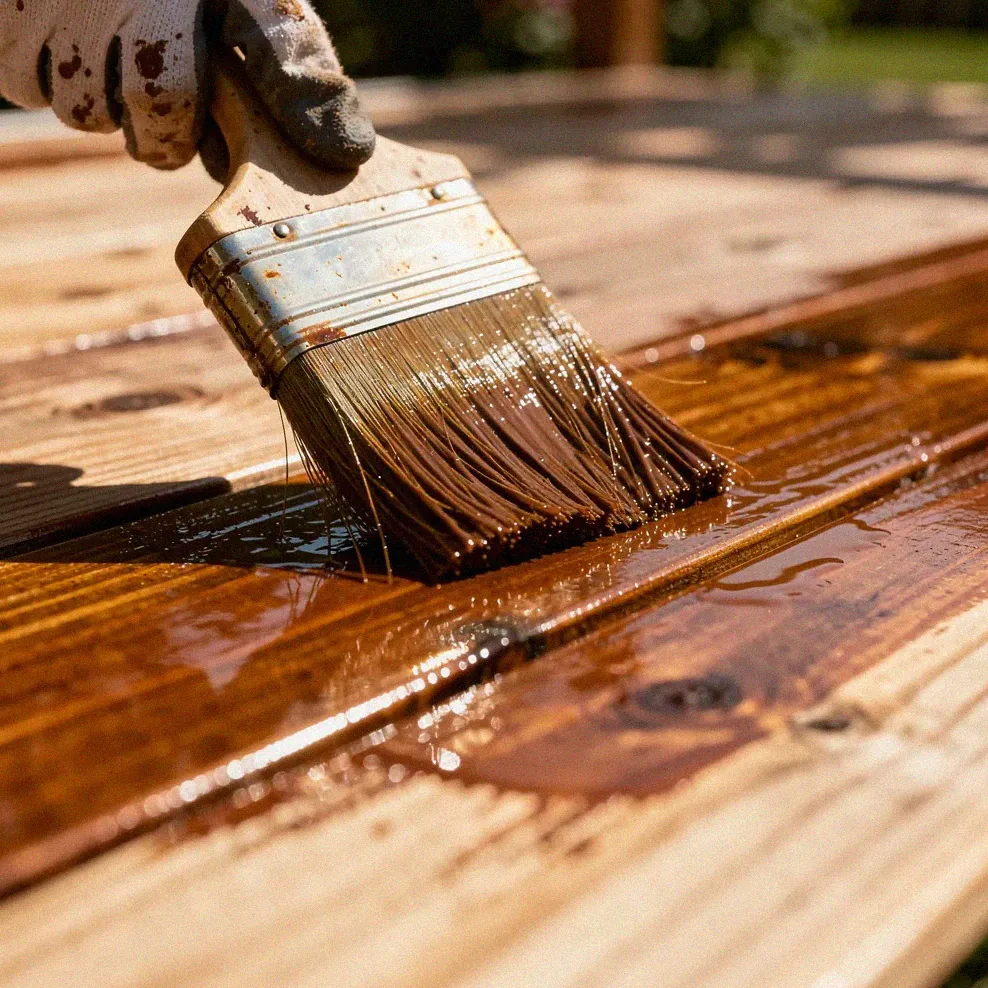
Deck staining near me searches often lump staining and sealing together, and the two jobs do overlap, but they aren't identical. A sealer is a clear or lightly tinted coating built purely to block moisture. A stain does that same job while adding color, ranging from a transparent tint that barely shifts the wood's natural tone to a solid stain that behaves closer to paint. Deck sealing and staining done together, as one job, is the more common request: seal the wood against water damage and add color and UV protection in a single application.
Getting the coverage right depends on prep work most homeowners underestimate. Old, failing stain or sealer has to come off the boards before a new coat goes on, through pressure washing, sanding, or a chemical stripper depending on how many layers have built up over the years. Applying stain over wood that hasn't been cleaned and dried properly is the most common reason a deck finish fails within a year instead of lasting three to five.
Staining Redwood Decking in Berkeley
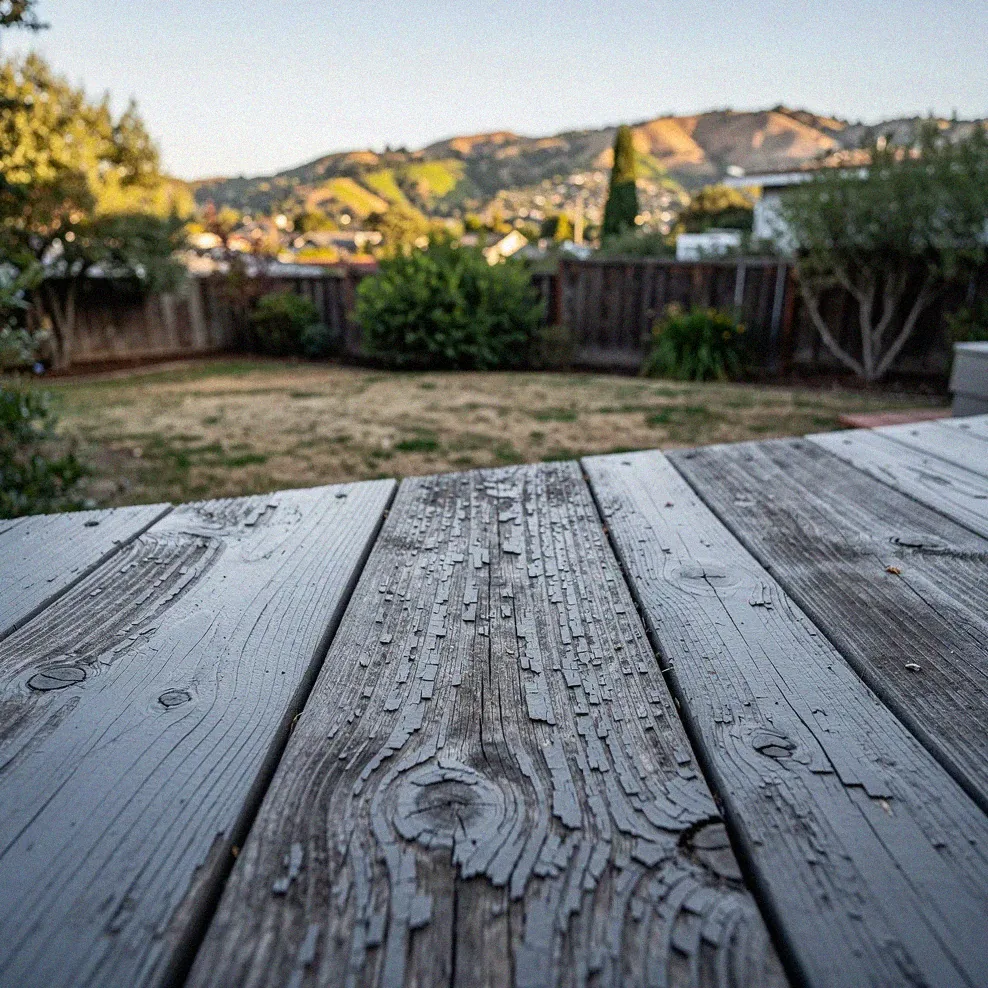
Redwood is the decking material East Bay painters see more than any other, and it behaves differently than the pressure-treated pine common in other parts of the country. The wood resists insects and rot naturally, which is why so many Berkeley decks built decades ago are still structurally sound. But raw redwood left unstained turns gray and starts to check along the grain within a couple of seasons of sun exposure.
A semi-transparent stain is usually the best deck staining choice for redwood, since it lets the reddish-brown grain that gives the wood its name show through while still blocking UV. Solid stains cover the grain entirely and go longer between reapplications, which makes sense on an older deck with heavy sun damage a transparent finish can no longer hide. Either way, the product needs to be rated for horizontal, walked-on surfaces. A fence stain and a deck stain aren't interchangeable, even when the cans look identical on a hardware store shelf.
Deck Staining for Berkeley Hills and Fog-Belt Homes
A deck in the Berkeley Hills faces different conditions than one in the flats near San Pablo Avenue or downtown. Hillside decks catch more direct fog, especially on shaded lots under mature oaks and eucalyptus, and that extra moisture creates ideal conditions for mildew to take hold in a stain that isn't rated for it. A deck staining contractor working in the hills should use a mildew-resistant formula and pay close attention to drainage between the boards, since standing moisture underneath accelerates rot in places a homeowner won't see until it's a structural problem.
Decks in the sunnier flats deal with the opposite issue: UV breakdown happens faster, and stain color fades sooner than on a shaded hillside deck. The climate should shape the stain choice and the maintenance schedule, not a one-size-fits-all recommendation. A deck staining contractor near you who's worked across both microclimates will know which conditions your deck actually faces.
Deck staining also pairs naturally with a full exterior repaint, since both jobs use similar weather-resistant coatings and often get scheduled together to cut down on disruption. Many Berkeley painting contractors offer deck staining and restoration alongside their exterior painting services, so a homeowner refreshing a deck and a house exterior in the same season can often have both handled by one crew.
Deck Staining or Deck Painting?
Staining isn't the only option for an older or heavily weathered deck. If the boards show real damage, or you want a uniform, opaque color instead of a wood-grain finish, solid deck paint might fit better. The tradeoffs between the two, cost, upkeep frequency, and how each holds up over time, are different enough to sort out before you commit either way. See our deck painting vs. staining guide for a full breakdown of which approach fits your deck's condition and age.
Get a Written Estimate for Your Deck
A stain rated for the wrong exposure, or applied without the right prep, tends to fail within a year regardless of how good the product is. A written estimate should spell out what prep is included, which stain product and finish level is being used, and how the quote accounts for your deck's sun or fog exposure specifically. Check license numbers and reviews before you commit, and ask directly whether the crew has redwood experience, since it isn't the same material as the pressure-treated lumber most deck-staining companies see outside the Bay Area.
Frequently Asked Questions
How much does deck staining cost?
Cost depends on the deck's square footage, how much prep the old finish needs before restaining, and whether you're choosing a semi-transparent or solid stain. A deck that's never been stained, or one where old stain is peeling and needs to be stripped first, costs more than a deck that's simply due for a routine recoat. Ask for a written estimate that separates prep work, like pressure washing or stripping, from the stain application itself, so you can see exactly what's driving the total.
How often does a deck need to be restained?
Most stained decks need a fresh coat every two to three years, though the timeline shifts with sun and moisture exposure. A deck in a sunny, exposed spot in the flats fades from UV faster and may need restaining closer to the two-year mark. A shaded deck in the Berkeley Hills that catches heavy fog holds color longer but is more prone to mildew, which can mean restaining sooner if the surface shows dark spots or stops shedding water the way it should.
Can you stain a deck that's already painted or has old peeling stain?
It depends on what's on the deck now. A deck with old, worn stain usually just needs pressure washing or light sanding before a new coat goes on. A deck that's been painted, or has heavy peeling and flaking, needs that old finish stripped down to bare wood first, since stain can't penetrate through paint or thick, failing layers the way it's designed to. A contractor should check the current finish during your estimate and say plainly which prep path your deck actually needs.