Power Washing in Berkeley, CA
Power washing before an exterior paint job is where good prep starts and bad paint jobs fail early. A painter who skips it, or who runs the same pressure setting on your siding that a crew would use on a concrete driveway, ends up locking dirt, mildew, and loose old paint under a fresh coat that has nothing solid to grip. Power washing done right for pre-paint prep strips away everything holding the new paint back, without gouging into the wood siding underneath it.
That distinction matters more in Berkeley than in most cities. A lot of general power washing work here is driveways, decks, and sidewalks, and those surfaces can take a hard blast of water with no downside. A hundred-year-old Craftsman bungalow with original wood siding cannot. The same pressure that clears years of grime off concrete will splinter cedar shakes, force water behind clapboard, and strip paint down to bare wood in patches instead of an even, workable surface.
Why Power Washing Comes Before Every Paint Job
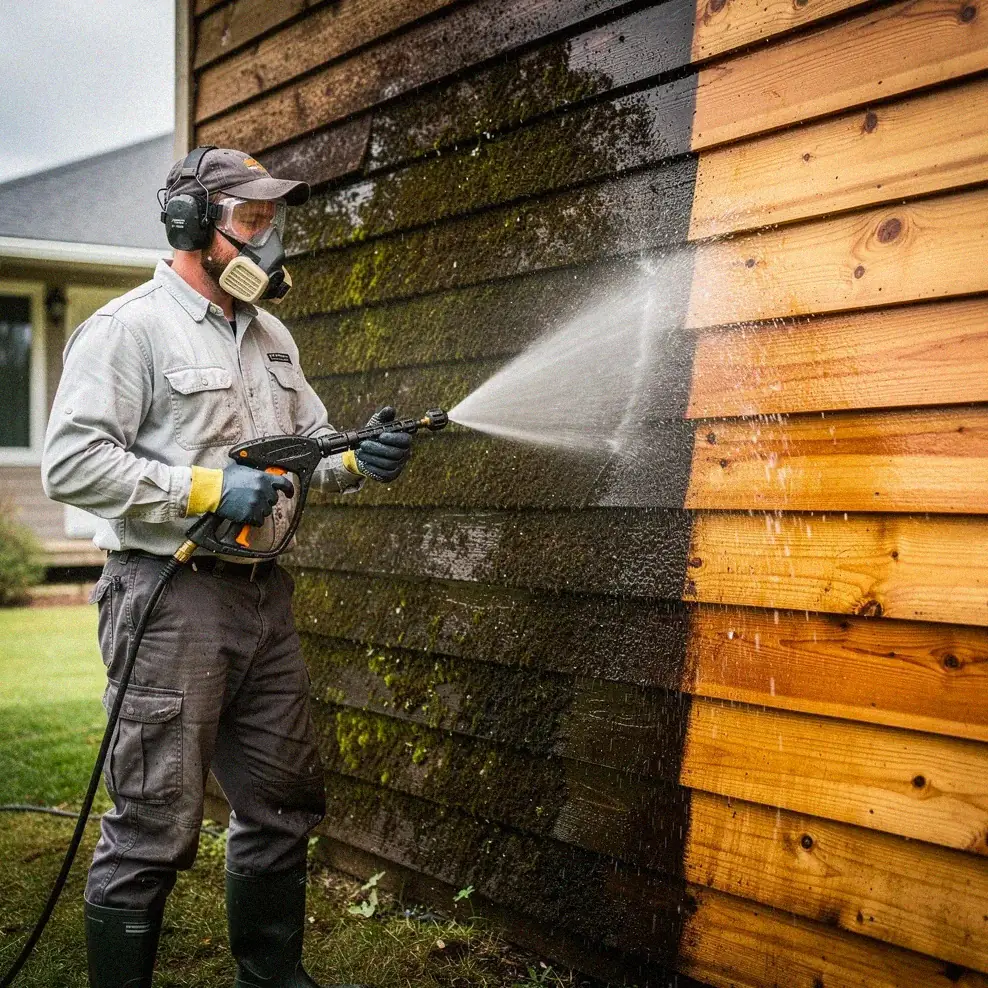
New paint needs a clean, sound surface to bond to. Dust, pollen, cobwebs, chalking from old paint, and biological growth all sit between the existing surface and any new coat, and paint applied over that layer looks fine for a season before it starts peeling, sometimes in sheets. A pre-paint power wash removes that layer along with any loose, flaking paint that a scraper alone would take hours to chase down. It also raises problems a painter needs to see before quoting the job: soft wood, hidden rot, or sections where the old paint is failing badly enough to need extra prep work.
Moss, Algae, and Berkeley's Marine Layer
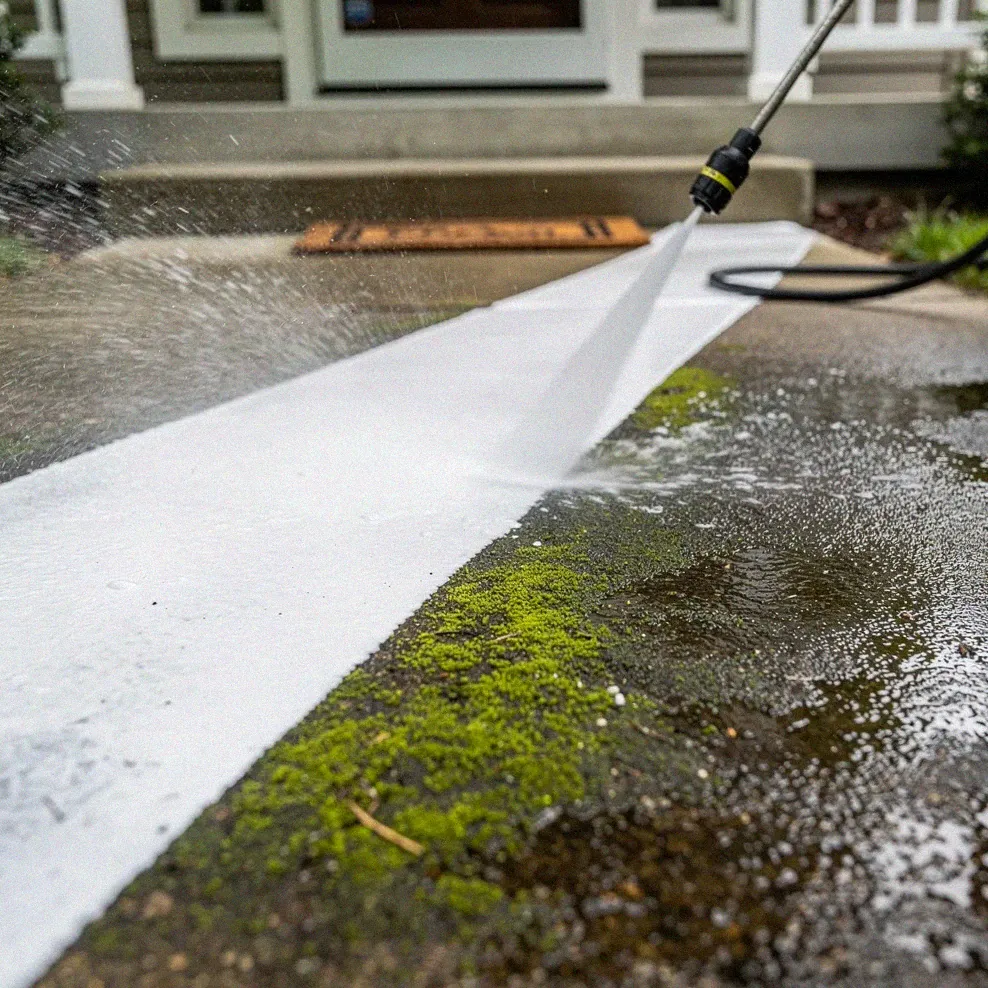
Berkeley sits in the fog belt, and that marine layer keeps north-facing walls, covered porches, and anything shaded by mature trees damp for long stretches of the year. Moss and algae take hold in exactly those conditions, and they show up most on the older Craftsman and brown-shingle homes that make up so much of Berkeley's housing stock, where deep eaves and covered porches create the shaded, moisture-holding spots this growth needs. Left alone, that growth holds moisture against the siding and undermines paint adhesion in the same spots every time a new coat goes on.
The Right Pressure for Older Wood Siding
Wood siding on a house built before the 1940s was never meant to take the kind of pressure that strips a driveway. On brown-shingle and Craftsman exteriors, the standard approach is a lower-pressure soft wash: a cleaning solution formulated for mildew and algae does the actual lifting, and the pressure washer's job is mainly to rinse it off, not blast it off. Pushed too hard, high pressure drives water past the siding into the wall cavity, splinters old cedar shakes, and etches grooves into softwood trim that show up under the new paint no matter how carefully it's applied afterward. Anyone quoting a power wash on an older Berkeley home should be adjusting pressure and nozzle choice for the material in front of them, not running one setting on every job.
What's Included in a Pre-Paint Power Wash
A proper pre-paint wash starts with a walk-around to flag problem areas: heavy mildew, loose paint, soft or damaged wood. A cleaning solution goes on first for any mildew, algae, or chalking old paint, then a low-to-moderate pressure rinse clears it away section by section. Painters typically build in 24 to 48 hours of dry time afterward before any primer or paint goes on, since trapping moisture under a new coat is one of the more common reasons a paint job fails within the first year.
Power Washing and Lead Paint on Pre-1978 Homes
Berkeley has an unusually high share of homes built before 1978, and older paint layers on those homes may contain lead. Blasting bare paint chips loose with a pressure washer without containing the runoff is not a small oversight on a pre-1978 property, since dust and paint chips need to be controlled under EPA lead-safe (RRP) work practices rather than sprayed loose into the yard and storm drains. If your home falls into that window, ask your painter directly how they contain and dispose of paint debris during power washing, not just how they'll paint the finished surface. Our guide to lead-safe painting for Berkeley's older homes covers what those work practices actually involve.
Pair Power Washing With Your Exterior Paint Job
Power washing rarely stands alone as a project. It's the first phase of a full exterior painting job, done far enough ahead of painting to dry completely, and most Berkeley painting contractors bundle the two together rather than sending a separate crew, so the same crew handling your prep wash understands exactly what condition the surface needs to be in before they pick up a brush or sprayer.
Get a Written Estimate for Power Washing
If your home's siding is showing moss, algae, or chalky old paint ahead of a repaint, a written estimate will spell out the pressure approach, cleaning products, and dry time built into the job, not a flat per-square-foot number that ignores what your siding actually needs. See Berkeley painting contractors near you and check license numbers before committing to a quote.
Frequently Asked Questions
Do you need to power wash a house before painting it?
Yes, in almost every case. Paint needs a clean, sound surface to bond to, and dust, chalking, mildew, and loose old paint all get in the way of that bond. Skipping the wash and painting directly over a dirty or contaminated surface is one of the most common reasons an exterior paint job fails early, usually showing up as peeling or bubbling within the first year or two.
Can power washing damage older wood siding on a Craftsman or brown-shingle home?
It can, if the pressure and technique aren't matched to the material. High pressure meant for concrete or driveways will splinter cedar shakes, gouge softwood trim, and force water behind the siding on an older home. The correct approach for brown-shingle and Craftsman exteriors is a lower-pressure soft wash that relies on a cleaning solution to lift mildew and algae, with the pressure washer used mainly to rinse rather than blast.
Does power washing remove mold and algae caused by Bay Area fog?
Yes. Berkeley's fog belt keeps shaded, north-facing walls and covered porches damp for long stretches of the year, which is exactly the environment moss and algae need to take hold. A cleaning solution formulated for mildew and algae, followed by a proper rinse, removes that growth from siding and trim before it can undermine adhesion on a new coat of paint.