Cabinet Painting in Berkeley, CA
Cabinet painting near me starts with a question most Berkeley homeowners already know the answer to: your kitchen or bathroom cabinets are structurally fine, but the finish is dated, chipped, or just wrong for the room. A professional cabinet painter strips that finish down, preps the wood correctly, and sprays or hand-finishes a new coat that holds up to daily use, without the cost or mess of a full cabinet replacement.
Cabinet painting near me is searched around 12,100 times a month nationally, and it's easy to see why. A full kitchen remodel can run tens of thousands of dollars. Repainting the cabinet boxes and doors you already have, done well, gets most of the visual transformation at a fraction of the price. The catch is the phrase "done well." Cabinet finishes take more abuse than any other painted surface in a home: grease, steam, water splashes, constant hand contact. A rushed paint job peels at the hinges within a year. A properly prepped one lasts a decade or longer.
Kitchen Cabinet Painting
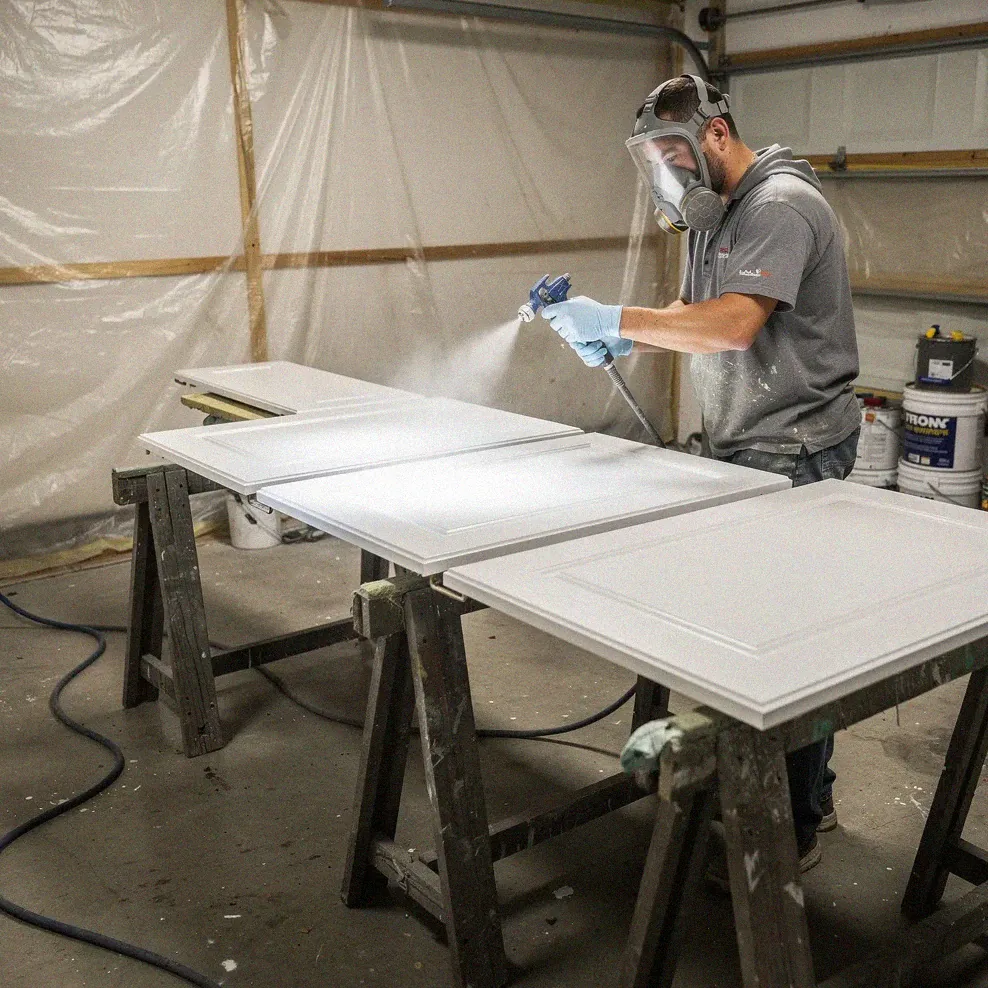
Kitchen cabinets are the highest-traffic painted surface in most homes, and the prep work matters more here than almost anywhere else in a paint job. Grease film builds up on cabinet doors near the stove and sink even in kitchens that look clean, and paint applied over that film will not bond. Every cabinet painting job for a kitchen starts with a degreasing wash, followed by sanding to knock down the existing sheen so the new coat has something to grip.
Doors and drawer fronts come off the boxes and get finished separately, laid flat or hung on a spray rack, so the paint goes on even and free of drips along the edges and panel details. This is the step that separates a cabinet-painting job from someone with a roller and a weekend to spare: spraying in place, with the doors still hinged, almost always leaves visible brush marks or overspray on the walls and floor around the cabinets.
For the coating itself, most kitchen cabinet jobs call for a hybrid enamel or a catalyzed conversion varnish rather than standard wall paint. These finishes cure harder and resist the heat, moisture, and grease that a kitchen throws at them daily. A quality cabinet enamel applied correctly can look and perform close to a factory finish, which is the benchmark homeowners are usually picturing when they search for kitchen cabinet painting in the first place.
Color choice on kitchen cabinets has shifted noticeably over the past few years. Two-tone kitchens, a darker color on the lower cabinets and a lighter shade on the uppers, have become one of the most requested looks, along with warm off-whites and deep sage or navy tones that read as classic rather than trend-chasing. For Berkeley's older Craftsman kitchens specifically, a painted finish in a period-appropriate color, sage green, a warm cream, or an earthy terracotta, often looks more at home than a bright white that reads as a generic remodel.
Bathroom Cabinet Painting
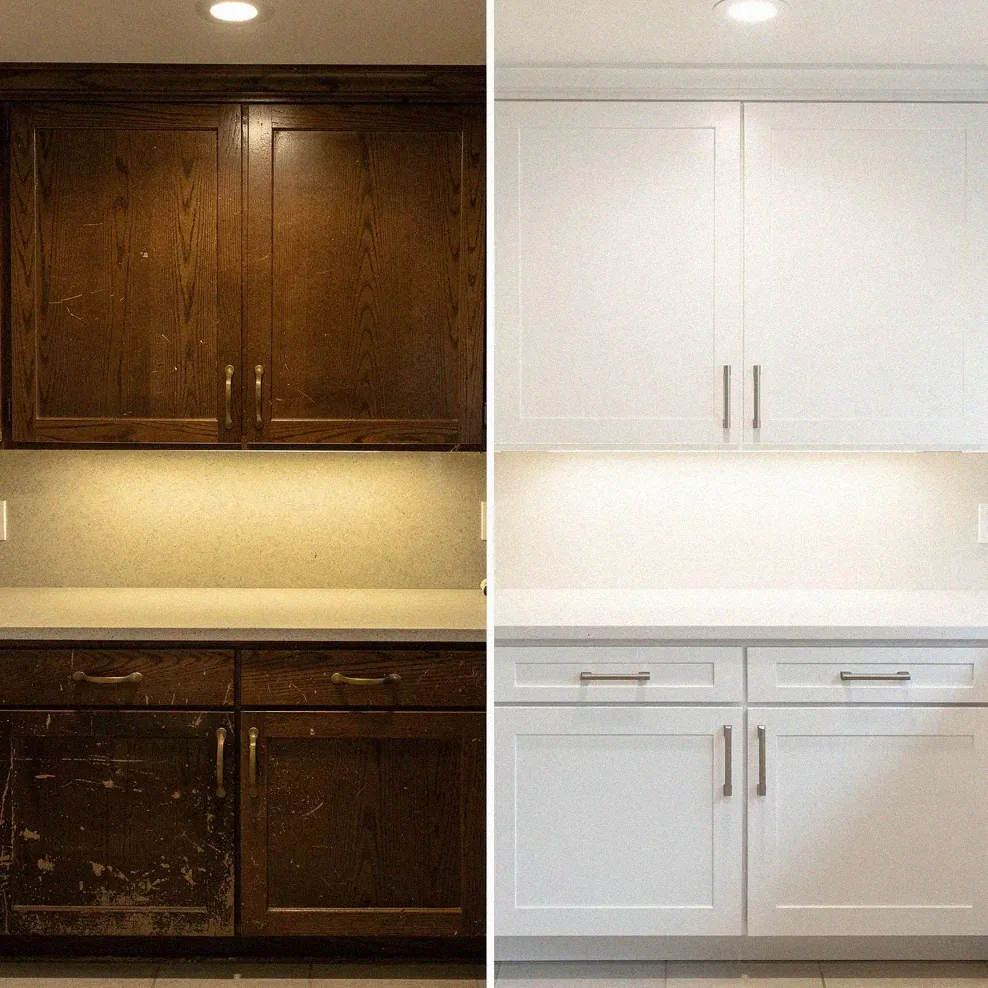
Bathroom cabinets face a different set of stresses than kitchen ones. Humidity from showers and baths cycles through the room constantly, and that moisture will find any gap in a poorly sealed finish and cause the paint to bubble or peel, usually starting at the corners closest to the sink. Bathroom cabinet painting calls for a moisture-resistant finish and careful attention to sealing every edge, especially around cutouts for plumbing and hardware.
Vanities also tend to be smaller than kitchen cabinet runs, which makes them a lower-cost, faster project on their own, and a natural add-on when a bathroom is getting refreshed but a full vanity replacement isn't in the budget. A repainted vanity paired with new hardware and a fresh coat of wall paint can change the feel of a small bathroom substantially for a modest investment.
Should You Paint or Replace Your Cabinets?
This is the question underneath most searches for cabinet painting, and the honest answer depends on the condition of the boxes underneath the finish, not the finish itself. If the cabinet boxes are solid wood or good-quality plywood, square, and free of water damage or structural sag, painting almost always makes more financial sense than replacement. You're paying for labor and coating rather than new materials, new installation, and the disruption of tearing out a working kitchen.
Replacement becomes the better call when the layout itself needs to change, when boxes are damaged by water or termites, or when the cabinets are a low-grade particleboard construction that won't hold paint or hardware reliably no matter how well it's prepped. A painter who's honest with you will tell you if your cabinets are a poor candidate for painting rather than taking the job anyway. That's a conversation worth having during your estimate, before any work is scheduled.
Preserving Berkeley's Original Craftsman Kitchens
Berkeley has an unusually high concentration of pre-1940s Craftsman bungalows and brown-shingle homes, and a lot of those kitchens still have their original built-in cabinetry, or cabinets from a period-sympathetic remodel done decades ago. Those cabinets are typically solid wood, often fir or oak, with the kind of joinery and paneling detail that newer stock cabinetry doesn't replicate at any price point.
Ripping that out for a modern flat-panel replacement is a one-way decision. Once original Craftsman millwork is gone, it's gone. Painting preserves the structure and the period detail while updating the finish to something that suits how the kitchen is used today. It's worth having a cabinet painter walk through and assess what you have before defaulting to a full remodel; homeowners are often surprised at how much life is left in cabinetry that's a hundred years old, once the right prep and finish go on it.
For homes built before 1978, which describes a large share of Berkeley's housing stock, older cabinet finishes may contain lead paint. A cabinet painter working on a pre-1978 home should be following EPA lead-safe (RRP) work practices: containing dust, using specific cleanup procedures, and testing when the finish history is unknown. Ask about this directly when you're getting quotes, especially for original cabinetry that's never been repainted.
A reputable Berkeley painting contractor that includes cabinet refinishing among its core services will typically have direct experience with the kind of original built-in cabinetry common in Berkeley's older housing stock.
Get a Written Estimate for Your Cabinets
If your cabinets are structurally sound but showing their age, a written estimate will tell you what condition assessment, prep, and finish are actually needed, not a ballpark guess. See Berkeley cabinet painters near you and check license numbers before you commit to a quote.
Frequently Asked Questions
How much does cabinet painting cost?
Cost depends on the number of cabinet doors and drawer fronts, the condition of the existing finish, and whether the job is sprayed off-site or finished in place. A full kitchen with 20 to 30 doors and drawers typically costs more than a single bathroom vanity, and heavily worn or previously painted-over cabinets need more prep time than cabinets in good condition. Ask for a written estimate that breaks out prep, materials, and labor separately so you can see what's driving the price.
How long does painted cabinet finish last?
A cabinet finish applied with proper degreasing, sanding, and a hard-curing enamel or conversion varnish typically holds up for 8 to 15 years under normal kitchen or bathroom use before it needs a refresh. Finish life depends heavily on prep quality: skipped degreasing or sanding steps are the most common reason a cabinet paint job fails early, usually showing up as chipping near hinges and handles within the first year or two.
Can you paint over stained or varnished cabinets?
Yes, with the right prep. Stained and varnished wood cabinets need to be sanded to remove the existing sheen and sealed with a bonding primer before paint goes on, since paint won't adhere well to a glossy varnished surface on its own. Solid wood cabinets in good structural condition, which describes most of Berkeley's original Craftsman-era cabinetry, are typically excellent candidates for this kind of conversion.
Is it cheaper to paint cabinets than to replace them?
In almost every case, yes, assuming the cabinet boxes themselves are structurally sound. You're paying for labor, prep materials, and coating rather than new cabinet boxes, doors, hardware, and installation labor. The main exception is when the underlying cabinets are damaged, made of low-grade particleboard that won't hold paint well, or when you're changing the kitchen layout, in which case replacement may be the more practical route regardless of cost.