Painting Berkeley's Craftsman, Victorian & Brown-Shingle Homes
Berkeley's housing stock is a working museum of early-twentieth-century American architecture, and that variety is exactly what trips up a painter who's used to newer, more uniform construction. A brown-shingle bungalow in the hills, a gingerbread Victorian near Elmwood, a Julia Morgan-designed landmark, and a stucco flat from the 1930s each demand a different approach to prep, materials, and technique. Treat them the same way and the paint job either fails early or, on a designated landmark, creates a real compliance problem.
This guide walks through what each of Berkeley's major architectural styles needs from a painter, where lead paint comes into play on the city's older homes, and when a repaint requires more than a crew and a color chart. For the general mechanics of a professional repaint, including the prep sequence every job should follow, see our exterior painting page.
Brown-Shingle Homes: Wood Prep and the Paint-or-Stain Question
Berkeley practically invented the brown-shingle style, and homes built in this tradition, common through North Berkeley and the hills, were designed around redwood or cedar shingles meant to weather naturally rather than disappear under a paint film. Before anything else, a painter needs to check the shingles themselves: moss and lichen scraped off by hand rather than blasted with a pressure washer strong enough to gouge soft, aged wood, and any split, curled, or rotted shingles replaced with matching stock before finish work starts.
The real decision on these homes is paint versus stain. A semi-transparent stain lets the shingle grain and natural silvering show through while still adding UV and moisture protection, which is why most owners stain the shingle field and reserve solid paint for trim, window casings, and porch details. Solid paint over shingles looks cleaner in the short term, but it seals the wood's surface, and shingles that can't shed the moisture they absorb during Berkeley's foggy months tend to cup, split, and fail earlier than a stained equivalent. There's a preservation angle too: heavy paint over original shingle siding can strip away a character-defining feature that matters if the home is ever considered for landmark status, so it's worth thinking past the current owner's preference before committing to a full solid-color repaint.
Craftsman Bungalows: Rafter Tails, Tapered Columns & Color-Blocking
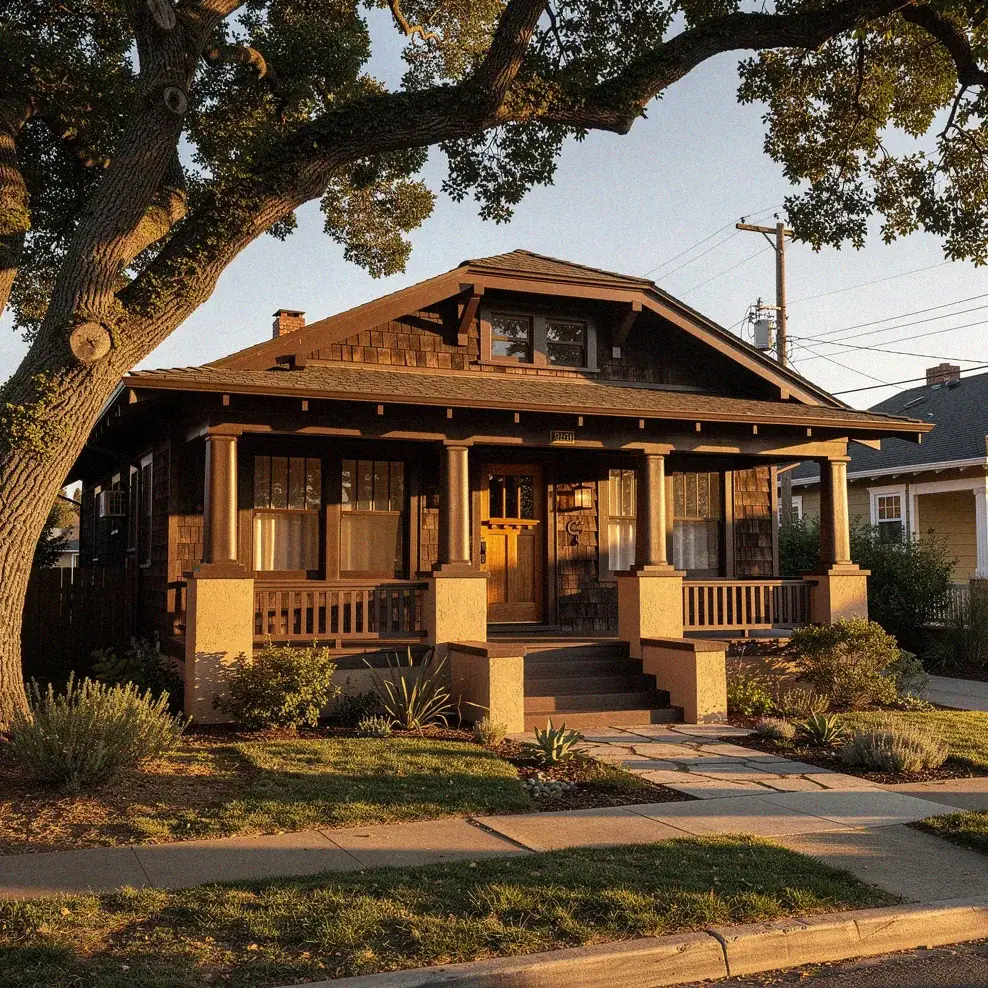
Craftsman bungalows built the horizontal, low-slung look Berkeley is known for using exposed rafter tails, deep eave overhangs, and tapered or battered porch columns, often set on a stone or clinker-brick base. Those rafter tails and eave details take a century of direct weather exposure with almost no protection, so they're where a painter finds most of the wood rot on a Craftsman repaint: soft spots at the tail ends, checked grain along exposed beams, and paint that's already failed at the joints before the rest of the house shows wear.
Color is the other half of the job. Craftsman homes were designed for a body, trim, and accent color scheme, typically three to four colors, meant to emphasize the horizontal lines of the house and pick out the rafter tails, window trim, and porch structure as separate elements rather than painting the whole facade one color. Getting the cut-in lines crisp where trim meets shingle or clapboard siding takes real brushwork, not a sprayer aimed broadly at the wall. A muddy color-block line is one of the fastest ways to make an otherwise good paint job look amateurish on this style of home.
Victorian & Edwardian Homes: Ornate Trim and More Than One Color
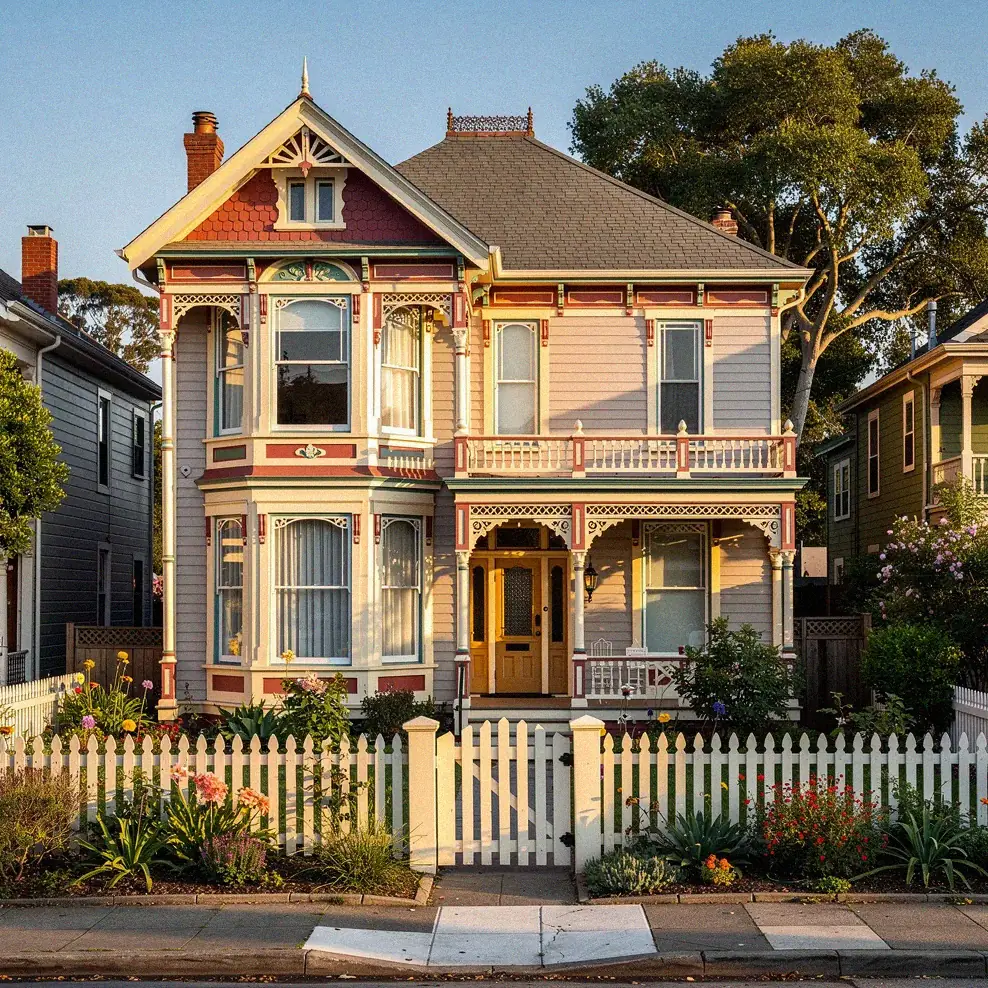
Berkeley's Victorian and Edwardian cottages carry the most detailed millwork in the city: gingerbread trim, turned porch posts, decorative corbels, and window surrounds that were built to be painted in multiple colors from the start. A single flat color across all of that detail erases the depth the woodwork was designed to show. Most Victorians read best with somewhere between four and six colors split across the body, trim, sash, and accent details, which means more time spent masking and cutting in by hand than a simple two-tone repaint.
These homes are also among the most likely in Berkeley to have several layers of pre-1978 lead paint underneath whatever color is on the surface today, since the ornate trim rarely gets stripped down to bare wood between repaints. That raises the stakes on how old paint gets removed during prep, which we cover in the lead paint section below.
Julia Morgan and Bernard Maybeck Landmarks: When to Involve the City
Berkeley is one of the few American cities where two nationally significant architects, Julia Morgan and Bernard Maybeck, left a real footprint of surviving residential work, and the city has designated more than 300 individual properties as City Landmarks or Structures of Merit. If a home carries that designation, or sits within one of Berkeley's historic districts, exterior color and material changes aren't purely the owner's call. Before repainting a designated landmark, check with the city's Landmarks Preservation Commission to find out whether the planned colors, materials, or any trim replacement need review first.
In practice, this usually means documenting the current condition and proposed colors before work starts, and it's a step worth building into the timeline rather than discovering midway through a job. Not every older Berkeley home has this designation, but if there's any question about a property's status, it's a five-minute check that avoids a much longer delay later.
Stucco Flats (1920s-1940s): Elastomeric Coatings and Crack Repair
Berkeley's stucco flats, built mostly in the 1920s through 1940s, come with a different problem entirely: cracking. Some of it is cosmetic hairline cracking from decades of normal settling; some of it, especially on homes near the Hayward Fault that runs through the hills, is deeper cracking that needs to be raked out, patched with matching-texture stucco, and allowed to cure before any coating goes on. Painting over an unrepaired crack just gives water a painted-over path into the wall assembly.
Once the surface is sound, an elastomeric coating is usually the right call for stucco, since it stays flexible enough to bridge minor hairline cracking that develops after the repaint rather than telegraphing every one back through the finish. It's a different product and application process than standard exterior paint, and it needs a stucco surface prepped specifically for it, not a general-purpose primer swapped in at the last minute.
Mid-Century Hillside Homes: Large Windows, Flat Rooflines & Accent Walls
Berkeley's mid-century modern homes, concentrated in the hills, bring their own set of details: expansive window walls, flat or low-slope rooflines with minimal overhang, and a design language that often leans on one bold accent wall or door color against a more neutral field. The large glass expanses mean careful masking is non-negotiable, since a sprayer or careless brushwork near a floor-to-ceiling window frame can leave overspray that's obvious from across the room. Flat rooflines also mean the fascia and parapet edges take direct sun and rain with almost no shelter, so they weather unevenly compared to a pitched roof with real overhang, and that uneven wear needs to be addressed section by section rather than assumed uniform.
These homes are also disproportionately on the sunnier, hillside side of Berkeley's fog line, which means UV-resistant topcoats matter more here than on a shaded, fog-belt property a mile away. Picking one paint spec for every Berkeley home regardless of which microclimate it sits in shows up as premature fading on this style first.
Lead Paint and Berkeley's Pre-1978 Homes
Nearly every style covered above, brown-shingle, Craftsman, Victorian, Edwardian, and most of Berkeley's early stucco stock, predates the 1978 federal ban on residential lead paint. That means any scraping, sanding, or heat work done to prep these homes for a repaint has real potential to release lead dust if it isn't contained properly. The EPA's Renovation, Repair, and Painting rule requires lead-safe certified firms for this work: plastic sheeting around the work area, wet-sanding or HEPA-vacuum-attached tools instead of dry sanding, and proper bagging and disposal of paint chips rather than sweeping debris into the yard.
Before hiring for any of the architectural styles above, confirm the painter is EPA Lead-Safe certified specifically, not just licensed and insured. See our page on what EPA Lead-Safe certification covers and our full guide to lead-safe painting for Berkeley's older homes for what proper containment looks like in practice.
Finding a Painter Who Knows the Difference
Matching the right approach to each of these styles takes more than a general painting background. Look for a Berkeley painting contractor who stays personally involved from the initial walkthrough through the final coat, which matters on a job where the right call on shingle wood, ornate trim, or a landmark property isn't something a rotating crew picks up on the fly. Confirm the contractor is bonded, insured, holds a California C-33 contractor license, and carries EPA Lead-Safe certification for exactly the pre-1978 housing stock described throughout this guide.
For homes throughout the rest of the city, our Berkeley house painting hub covers the full local market, and our neighborhood guide breaks down which styles show up most in Elmwood, North Berkeley, the Berkeley Hills, and beyond.
FAQ: Painting Berkeley's Historic and Architecturally Detailed Homes
Should I paint or stain a brown-shingle home in Berkeley?
Most brown-shingle homes look and hold up best with a semi-transparent stain on the shingle field, which lets the wood breathe and keeps the natural grain visible, reserving solid paint for trim and porch details. A full solid-color paint job over shingles can trap moisture and shorten the life of the siding, and it can also cover up a feature that matters for a home's historic character.
Does repainting a landmark or historic home in Berkeley require city approval?
It can. Berkeley has designated more than 300 properties as City Landmarks or Structures of Merit, including a number of Julia Morgan and Bernard Maybeck buildings, and exterior color or material changes on those properties may need review by the city's Landmarks Preservation Commission before work starts. Check a property's designation status before finalizing a color scheme if there's any question.
How many colors should a Craftsman or Victorian home have?
Craftsman bungalows typically read best with three to four colors split between body, trim, and accent details, emphasizing the horizontal lines and rafter tails the style is built around. Victorians and Edwardians usually carry more, often four to six colors across the body, trim, sash, and ornamental millwork, since that detail was designed to be picked out rather than painted over as one flat surface.
Is my older Berkeley home likely to have lead paint?
If the home was built before 1978, which describes most of Berkeley's brown-shingle, Craftsman, Victorian, and Edwardian housing stock, yes, it's likely that at least one layer of old paint contains lead. Any scraping or sanding during prep should follow EPA Lead-Safe (RRP) containment practices, and it's worth confirming a painter's lead-safe certification before signing off on exterior work.
Get a Repaint Plan Built Around Your Home's Style
A generic estimate based on square footage alone won't tell you whether your home needs shingle replacement, landmark review, elastomeric stucco repair, or lead-safe containment before the first coat goes on. Ask any painter bidding on a Berkeley home with real architectural character to walk the property, name the specific issues they see for that style, and put the prep scope in writing before anything is signed.