EPA Lead-Safe Certified Painting in Berkeley, CA
EPA Lead-Safe certified painting for Berkeley homes built before 1978, with on-site lead testing and containment work suited to the city's Craftsman bungalows, Victorians, and brown-shingle homes.
This page covers what EPA Lead-Safe certification actually requires, how lead testing works before a job starts, where California's own rules go beyond the federal minimum, and what to check before hiring a contractor for lead-safe work in Berkeley.
What EPA Lead-Safe Certified Actually Means
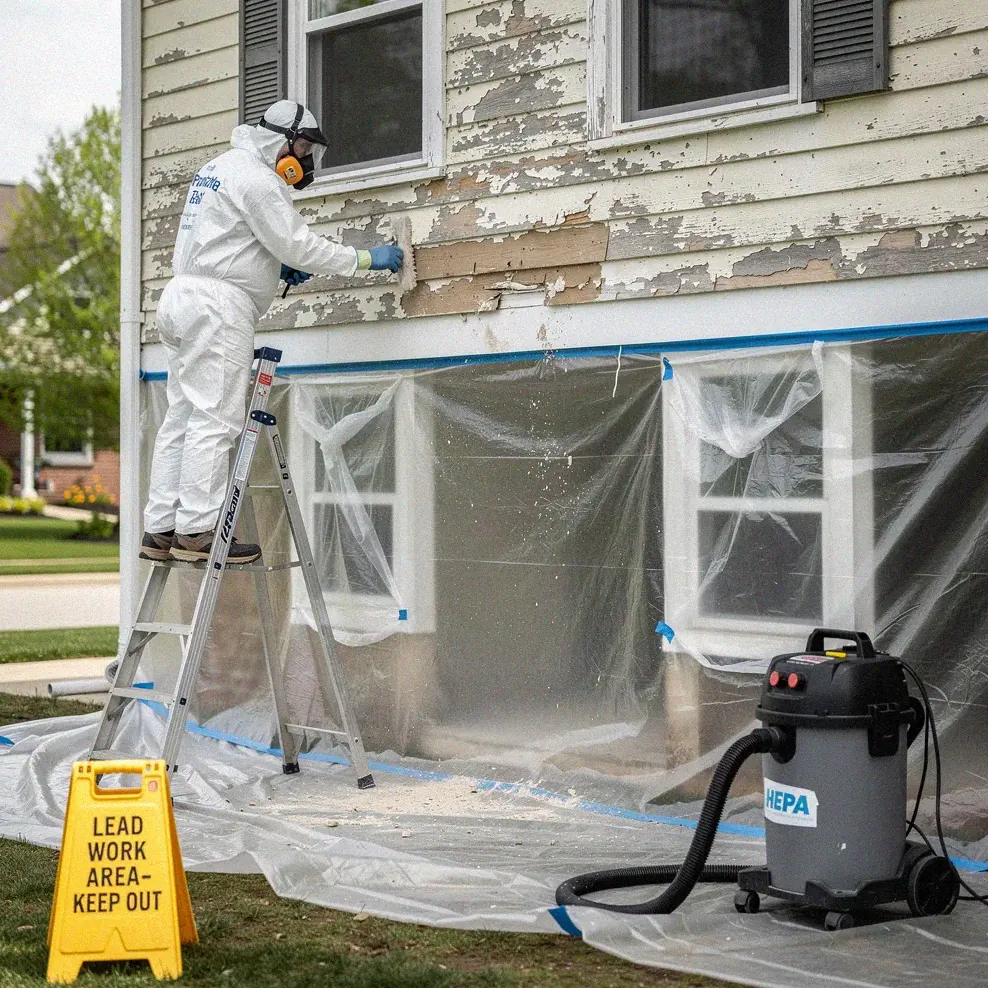
The EPA's Renovation, Repair, and Painting (RRP) Rule governs any paid work that disturbs painted surfaces in a home built before 1978, the year the federal government banned lead-based residential paint. Under RRP, the painting company itself has to hold EPA Lead-Safe Certified Firm status, and at least one person on every job site has to be a certified renovator who completed EPA-accredited training in how to set up containment, work the surface without spreading dust, and clean up to a documented standard afterward.
Firm and individual renovator certification both run on five-year renewal cycles with a required refresher course, so a company certified once, years ago, and never renewed isn't actually compliant anymore. On site, plastic sheeting seals off the work area before scraping or sanding starts, dry sanding and open-flame paint removal are off the table entirely, and any sanding tool has to be HEPA-vacuum attached. Debris gets bagged and disposed of as a controlled step, not swept into the yard at the end of the day.
Why This Matters More in Berkeley Than Most East Bay Cities
Berkeley's housing stock skews old in a way that puts a large share of the city's homes squarely inside RRP's scope. The Craftsman bungalows, brown-shingle homes, and Victorian and Edwardian cottages that give Berkeley its character were mostly built decades before the 1978 lead ban, and most still carry multiple layers of that original paint underneath whatever coat is on the walls today. Alameda County health data has consistently flagged Berkeley as one of the East Bay cities with the highest concentration of pre-1978 housing, and that concentration is the direct driver of the city's elevated lead exposure risk.
That risk isn't limited to exterior trim. Window sashes, door casings, and porch railings on these homes see the most friction and wear over decades, which is exactly where old paint chips and lead dust accumulate. A painter unfamiliar with Berkeley's building stock can treat a 1920s brown-shingle the same way they'd treat a 1990s stucco tract home, and that's where lead-safe corners get cut without anyone realizing it until dust has already spread.
How Lead Testing Works: XRF vs. Swab Test Kits
Before any scraping or sanding starts on a pre-1978 Berkeley home, the paint gets tested. Two methods cover most jobs.
XRF (X-ray fluorescence) testing uses a handheld analyzer that reads lead content directly through paint layers without cutting into the surface. A certified inspector or risk assessor gets an instant, quantified reading on the spot, which is why XRF is the standard for formal lead risk assessments and larger projects where precision matters.
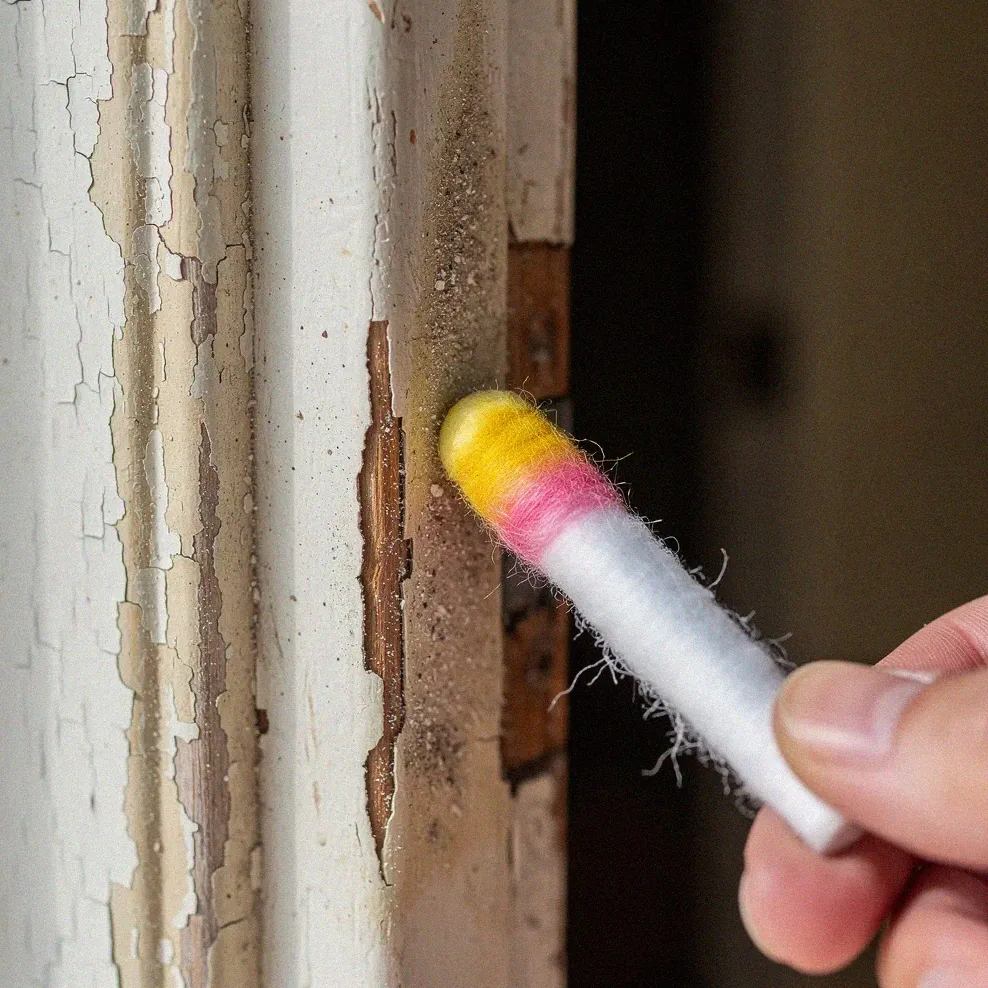
Swab test kits are the faster, lower-cost option for spot-checking individual components, like a single window sill, a stretch of trim, or a door. EPA-recognized swab kits use a chemical reaction that changes color when lead is present above a set threshold, giving a same-day answer without lab turnaround. They're the right tool for smaller touch-up jobs that fall under EPA's minor-repair exception, where testing the specific painted component is enough to decide whether full RRP containment applies.
Either way, testing happens before work starts, not as an afterthought. Skipping it on a Berkeley home built before 1978 means guessing at a hazard that's entirely testable in minutes.
California's Cal-OSHA Rules Go Beyond the Federal Minimum
The EPA's RRP Rule protects the homeowner and the household. California's Division of Occupational Safety and Health, better known as Cal-OSHA, layers on additional requirements that protect the workers doing the scraping and sanding, and those requirements are stricter than the baseline federal OSHA lead standard. Cal-OSHA requires more frequent blood-lead monitoring for workers on lead-disturbing jobs, sets tighter triggers for when respiratory protection and protective clothing become mandatory, and enforces its own inspection and penalty structure independent of the EPA's.
For a homeowner, the practical takeaway is simple: a Berkeley painting company can be fully compliant with federal EPA RRP requirements and still fall short of what California actually requires. Ask about both, not just one.
What to Look For When Vetting a Lead-Safe Painter
A Berkeley painting contractor who takes lead-safe work seriously holds both individual EPA Lead-Safe Renovator certification and Firm certification, current rather than lapsed, and can produce the certification number on request rather than just claiming the credential verbally. Look for a contractor who stays personally involved in containment setup on a lead-safe job rather than handing that work off to an unsupervised crew, since containment quality depends heavily on experience with the specific failure points, plastic sheeting that gaps at a corner, a HEPA vacuum attachment left off a sander, that an inexperienced crew can miss.
Pair that with a valid California C-33 Painting and Decorating contractor license, checkable yourself on the CSLB license database, along with active bonding and insurance. A contractor who treats lead-safe containment as a standard part of the process on Berkeley's Craftsman, Victorian, and brown-shingle homes, rather than an optional add-on, is the one worth hiring for this kind of job.
Ask for a written estimate that spells out the lead-safe scope specifically, testing method, containment steps, and cleanup verification, before comparing it against any other bid.
FAQ: EPA Lead-Safe Certified Painting in Berkeley, CA
What does it mean for a painter to be "EPA Lead-Safe Certified"?
The firm holds EPA Lead-Safe Certified Firm status under the RRP Rule, and at least one certified renovator on the job has completed EPA-accredited training in lead-safe containment, work practices, and cleanup verification. Both firm and individual certification require renewal every five years.
Do all painters need this certification to work on my Berkeley home?
Only if the home was built before 1978 and the work will disturb painted surfaces, such as scraping, sanding, or removing painted components. Given how much of Berkeley's housing predates 1978, that covers a large share of repaint jobs in the city.
How do you know if my home's paint contains lead before starting?
Testing happens first, either with a handheld XRF analyzer for a precise, instant reading or an EPA-recognized swab test kit for spot-checking specific components. The result determines whether full RRP containment applies to the job.
Is California's lead rule different from the federal EPA rule?
Yes. Cal-OSHA adds its own requirements on top of EPA's RRP Rule, focused on protecting workers with more frequent blood-lead testing and stricter respiratory protection triggers. A compliant Berkeley painter should meet both, not just the federal minimum.
Hiring for a Pre-1978 Berkeley Home
Ask any painter you're considering for their EPA Lead-Safe Certified Firm number and the name of the certified renovator who'll be on site, then confirm both are current rather than taking a certification claim at face value. For more on what that containment work looks like day to day, see our guide to lead-safe painting for Berkeley's older homes, and for the exterior- and interior-specific side of the job, see our pages on exterior painting and interior painting.