Berkeley Neighborhoods We Paint
Berkeley packs a surprising amount of housing variety into about eight square miles. A single day of estimates can take a painter from a fog-shaded Craftsman bungalow near the UC campus to a sun-drenched mid-century home overlooking the bay, and the prep work, paint selection, and access plan change at almost every stop. An experienced Berkeley painting contractor learns quickly that the right approach for one street rarely carries over to the next one. A written estimate for a Berkeley home should always start with a look at your specific block, not just the city as a whole. Here's what changes from neighborhood to neighborhood, and what that means for your project.
Elmwood
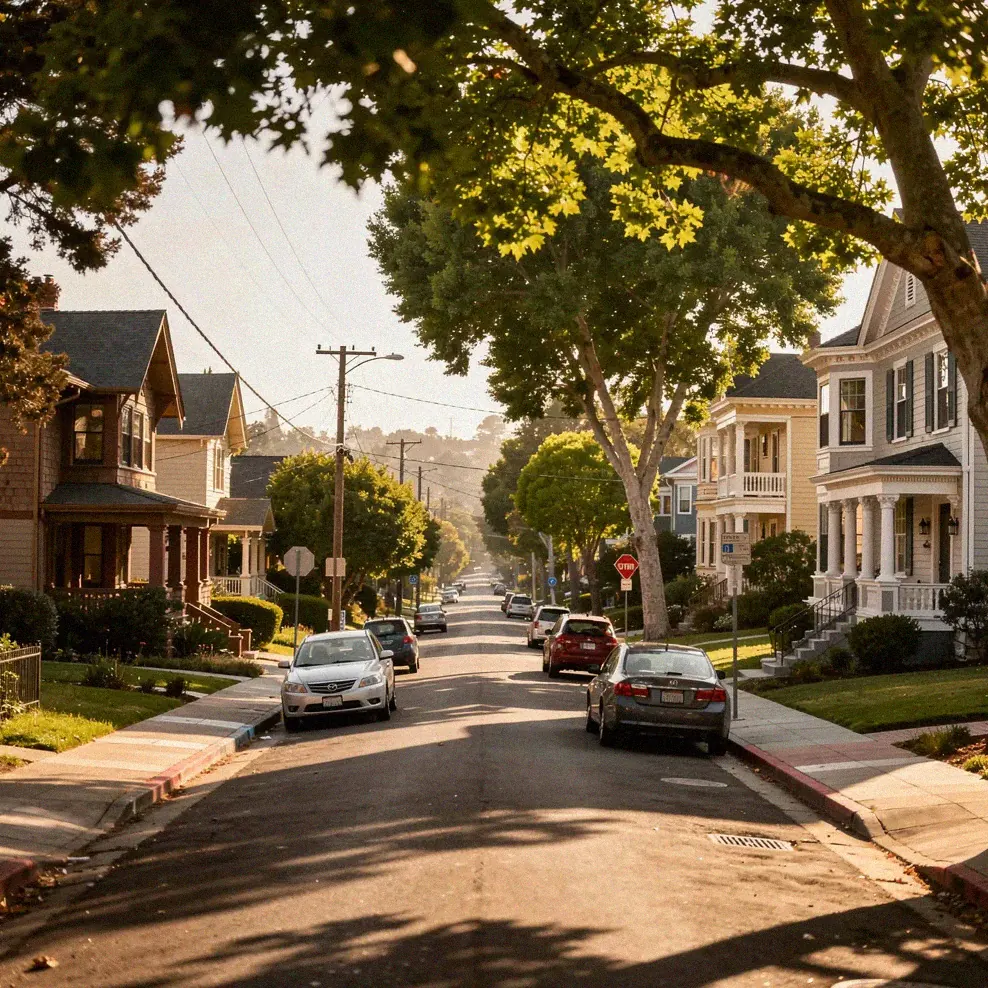
Elmwood's streets are lined with Craftsman bungalows and shingled cottages built mostly between 1905 and 1925, clustered a few blocks from the College Avenue shopping strip. The mature elm and oak canopy that gives the neighborhood its name also keeps siding shaded and slow to dry after rain, which stretches out the time between prep and the first coat on north- and east-facing walls. Original wood shingle siding here usually needs hand-scraping and spot priming rather than a quick power wash, since a century of paint layers doesn't come off evenly. Most projects run as full exterior repaints on 1,600 to 2,400 square foot two-story homes, with extra time built in for wide porch columns, eaves, and window trim that carry more detail than a typical stucco exterior. Cabinet refinishing tied to a kitchen update is common in these bungalows too, since many original kitchens have been remodeled at least once over the past century.
Thousand Oaks
Thousand Oaks sits around the granite outcroppings near Indian Rock Park, and its Craftsman and Tudor Revival cottages, most built in the 1900s through the 1930s, are tucked onto sloped, irregular lots shaped by that terrain. Rock ledges and retaining walls limit where a crew can safely set up scaffolding, and the stone and masonry accents common on these homes need a separate coating system from the wood and stucco around them. Homes built directly against the rock formations also trap moisture on the walls closest to the outcropping, so those sections need extra drying time before primer goes on. Lots here run smaller, often 1,200 to 1,800 square feet, but the terrain adds labor hours a flat-lot project wouldn't need.
North Berkeley
North Berkeley, the flat, walkable stretch around Shattuck Avenue and the Gourmet Ghetto, is dense with Victorian and Edwardian cottages alongside Craftsman bungalows built from the 1890s through the 1920s. Nearly all of this housing predates the 1978 lead paint ban, so exterior work almost always starts with lead-safe containment and testing before any sanding or scraping begins. For homes with original wood siding and window casings, that often means restoring detail work rather than replacing it, an approach covered in more depth on our Craftsman, Victorian, and brown-shingle painting page. The mix of single-family homes and small multi-unit buildings on shared lots also means scheduling has to account for tenants and shared walls, not just square footage.
Berkeley Hills
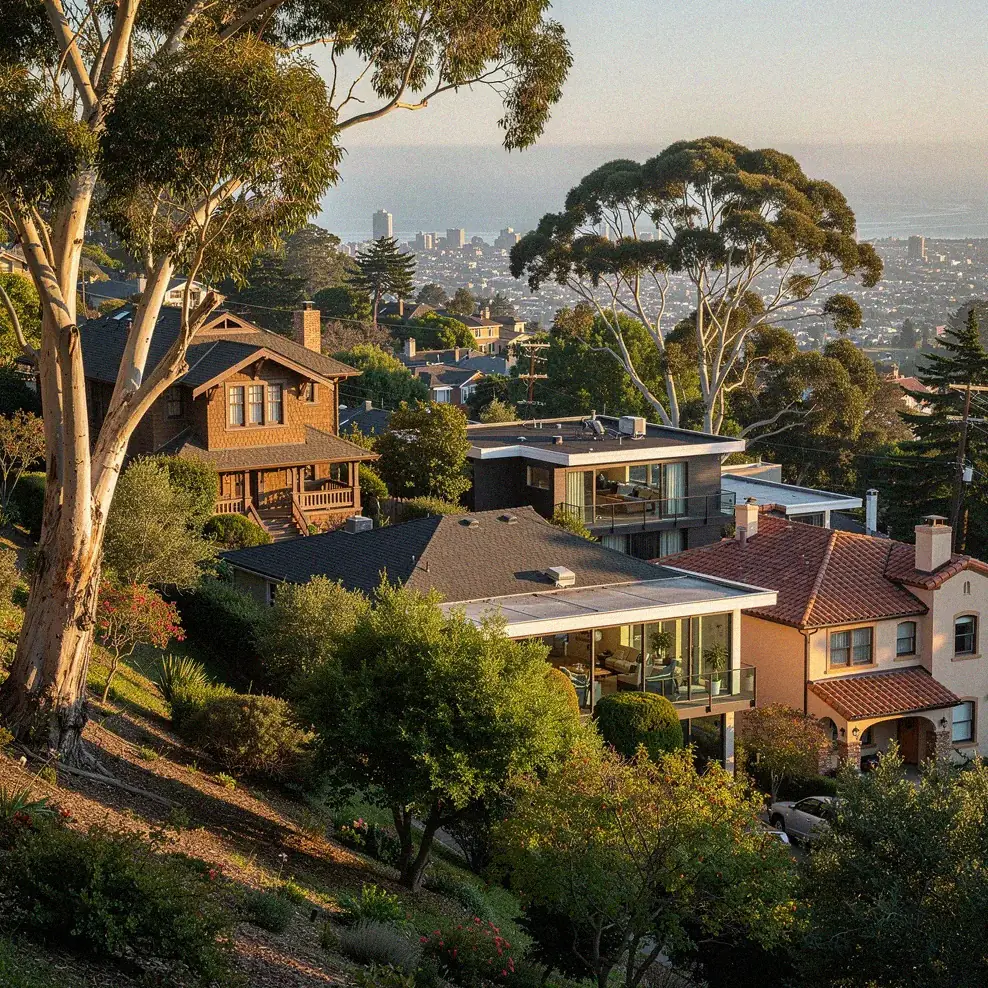
The Berkeley Hills cover the widest range of any neighborhood on this list, from 1920s Tudor and storybook homes to 1960s and '70s mid-century modern houses built for the views. Hillside access is the defining challenge: steep driveways and narrow, winding streets limit where a truck can park and how scaffolding gets set up, so jobs here often need a different rigging plan than a flatland project of the same size. The homes themselves tend to run larger, 2,500 to 4,000 square feet or more, which means bigger crews and multi-week timelines rather than a few days. Color choice matters differently up here too. A shade that reads well up close on a Craftsman bungalow can look flat, or clash, once it's seen from across the canyon against the bay in the background, so homeowners in the hills weigh how a color reads from a distance, not just on a paint swatch held against the wall.
Claremont
Claremont, home to the district's namesake hotel, mixes Craftsman bungalows with larger Mediterranean and Tudor Revival houses built mostly in the early 1900s through the 1930s. Like Elmwood, heavy tree cover from mature oaks and redwoods keeps many streets shaded, and north-facing walls here hold moisture long enough after a wet week that dry times before priming need to stretch accordingly. The neighborhood's larger, estate-scale properties also mean more square footage per job, sometimes 1,800 to 3,000 square feet, without necessarily adding the access complications of a hillside lot. Interior work in these bigger homes tends to cover more rooms per project than a standard Berkeley bungalow, simply because the floor plans run larger.
Northside
Northside, tucked against the UC Berkeley campus, holds a dense mix of Craftsman and Tudor homes alongside a high share of rental units, including the landmark Normandy Village storybook complex. Higher tenant turnover here means interior repaints between leases happen more often and on tighter turnaround than in owner-occupied neighborhoods, since a unit often needs to be paint-ready before the next tenant moves in. The historic multi-unit buildings in the area also call for matching original trim and molding details rather than defaulting to plain modern casing, which takes more time per unit than a straightforward wall refresh.
Rockridge-Adjacent Berkeley
The southeastern blocks of Berkeley that border Oakland's Rockridge neighborhood share much of that district's character: brown-shingle homes and Craftsman bungalows on tree-lined streets, most built in the 1900s and 1910s. The moisture and shade issues that show up in Elmwood and Claremont apply here too, since the tree canopy is just as heavy. What's different is the proximity to the College Avenue commercial corridor, where a handful of properties combine ground-floor retail with residential units above, which means a single project can involve both a storefront-facing repaint and a standard bungalow exterior on the same block.
West Berkeley
West Berkeley, the flatter stretch near San Pablo Avenue and the bay, looks different from the rest of the city: converted industrial warehouses and live-work lofts sit alongside older single-family cottages, with construction dates ranging from the early 1900s to more recent commercial-to-residential conversions. Metal siding, roll-up garage doors, and storefront facades common in the converted buildings need different coatings than the wood siding and stucco found elsewhere in Berkeley, and the open, flat terrain near the bay brings more direct wind and salt air exposure than the shaded hill neighborhoods see. Newer live-work conversions also tend to call for a more contemporary color palette than the historic cottages sitting a block away.
Finding the Right Fit for Your Block
Whichever Berkeley neighborhood you're in, the fundamentals stay the same: an honest look at your home's age and siding material, a prep plan built around your street's specific shade and moisture pattern, and a written estimate before anyone opens a can of paint. The Berkeley painting page covers what to expect from a local painting company working across the whole city, and the East Bay service area guide covers coverage in Oakland, Albany, El Cerrito, Emeryville, and Piedmont for homes just outside Berkeley's borders.
Frequently Asked Questions
Why does the right painter for a Berkeley Hills home differ from the right painter for a flatlands home?
Hillside properties need crews and equipment set up for steep driveways, narrow streets, and multi-story scaffolding on uneven grade. Flatland homes in North Berkeley or West Berkeley usually call for a different skill set instead: lead-safe prep on older wood siding, or coatings suited to converted industrial buildings. A painter who's worked across both knows when to bring rigging and when to bring a containment setup for older paint layers.
Does my neighborhood affect how long a paint job takes?
Yes. Tree-shaded neighborhoods like Elmwood, Claremont, and the blocks near Rockridge need longer dry times between coats after rain, since moisture lingers longer on north-facing walls under heavy tree cover. Larger Berkeley Hills homes take longer simply due to square footage and hillside access logistics. Smaller, flatter lots in North Berkeley or West Berkeley typically move through the schedule faster once prep work is complete.